One teaching network. One standard. Every learner known.
Across more than 20 countries, every learner in our network is assessed, planned for, matched to the right educator and measured as they grow, at home, online, at school, at work or in a learning venue nearby.
Educators are the heart of it. Around them, local partners, schools, companies, course partners and learning venues connect through one method, one educator standard and the shared technology our network runs on.
20+ countries joined in one network, with 110+ local operations teaching to one standard.
Indonesia
Singapore
Malaysia
Philippines
Thailand
India
United Arab Emirates
Saudi Arabia
Qatar
Egypt
Kenya
+ moreand more, 20+ countries in all
Countries
20+
Educators
72,000+
Learners taught
44,000+
Personal classes delivered
33,000+
Countries, where the network operates; educators, registered with the network; learners taught and personal classes delivered, cumulative across the network. Figures as of 17 October 2026.
Who the network connects
Educators at the heart, every partner connected around them.
Educators and learners sit at the heart of it. Schools, companies, course partners, local partners and learning venues join them through the same hub, so a school can meet an educator, a company’s team can learn in a venue nearby, and every learner gets the same standard wherever the lesson takes place. Choose a participant to see how it works through the network.
The Eduspine network: educators, learners, schools, companies, course partners, local partners and learning venues connected through one hub
Educators
Teach every class to one standard.
One application opens teaching at home, online, in partner schools, in companies and in learning venues across the network. Every learner arrives with a match, a brief and a plan, and the curriculum is ready to teach.
Meets through the network
Learners
Children, teenagers and adults with a personal plan.
Every learner is assessed, planned for and matched to the right educator, then learns in the place that suits them: at home, online, at school, at work or in a learning venue nearby. Progress is recorded after every session.
Meets through the network
Schools
Partner with the network for classes and enrichment.
Schools and universities bring network educators and programmes into their own classrooms, from enrichment and exam preparation to languages and future skills, with progress the school can see.
Meets through the network
Companies
Train their teams through corporate programmes.
Companies train their people with network educators and the same method: a starting point for each person, a plan and measured progress, at the workplace, online or in a learning venue near the team.
Meets through the network
Course partners
Bring courses and content onto the shared curriculum.
Course and content partners bring their programmes to the network, and network educators teach them to one standard for schools, companies and learners.
Meets through the network
Local partners
Run the network in their own community.
Local partners run the network in their own community on the shared method, curriculum, educator standard and technology. They recruit educators, serve learners in their language and open doors to local schools and venues.
Meets through the network
Learning venues
Host classes in coworking spaces, study rooms and centres.
Coworking spaces, learning spaces and venue providers host network classes close to where learners live and work, and bring a steady community of educators and learners into their rooms.
Meets through the network
The method
Six steps behind every learner, with every partner.
Assess, plan, match, teach, measure, adjust. A learner at home, a class in a school, a team in a company and learners in a learning venue all move through the same six steps, and each step hands the next one what it needs.
The OECD Digital Education Outlook 2026 frames three paths for teachers and AI and names augmentation, with teachers and AI working in tandem, as the most effective. Our method is built on that model.
01
Assess
Every learner begins with a placement and a conversation about goals, so teaching starts from where they truly are.
02
Plan
We build a personal learning plan around agreed goals, with mastery checkpoints along the way.
03
Match
We choose the educator through matching that weighs ten factors, from subject fit and schedule to track record.
04
Teach
The educator leads every lesson with guided questions and productive struggle, and moves on once the learner has mastered the step.
05
Measure
Progress is recorded after every session and brought together in a report each month.
06
Adjust
Learning goals update from real session notes, so the plan moves as the learner moves.
What our systems prepare, and what our educators decide
At every step the technology carries the work around the lesson and the educator leads the learning itself.
01Assess
Our systems
A placement test in the learner app recommends a starting level before the first class is planned.
Our educators
Confirm that starting point in the first lessons and agree the learning goals with the learner, the family or the partner.
02Plan
Our systems
Write each educator a personal learning brief from the enrolment details, ready before the first lesson.
Our educators
Turn the brief into a learning plan they own, shaped by the goals, the pace and the exams or skills ahead.
03Match
Our systems
Match learners to educators by weighing ten factors, including subject fit, schedule, distance, track record and how well a profile fits the goals.
Our educators
Meet every new learner already knowing where to begin; our teams change the match whenever the fit needs it.
04Teach
Our systems
Check attendance, let the learner confirm each session with a one-time code, and translate lesson notes into English every day, for learners and whoever supports them.
Our educators
Teach with guided questions and productive struggle, and judge how much help each learner needs at each step.
05Measure
Our systems
Update learning goals from real session notes and keep a progress record for every class. Our systems prepare the first draft of each monthly report; a quality check scores it, and anything below our threshold waits for our education team.
Our educators
Write the session notes that feed the record, and turn each month of findings into the next lessons.
06Adjust
Our systems
Raise early signals when a class needs help, and set a next-month plan with a mastery check in every report.
Our educators
Change the pace, teach again until the idea holds, and re-test mastery before the learner moves on.
People stay accountable for what reaches a learner. The systems behind these steps are the shared technology our network runs on, and we are extending it across the network.
Where learning happens
One standard, wherever a lesson takes place.
Quality travels across places as well as countries. The same method, the same educator standard and the same progress record follow the learner into a home, a classroom, an office and a coworking room.
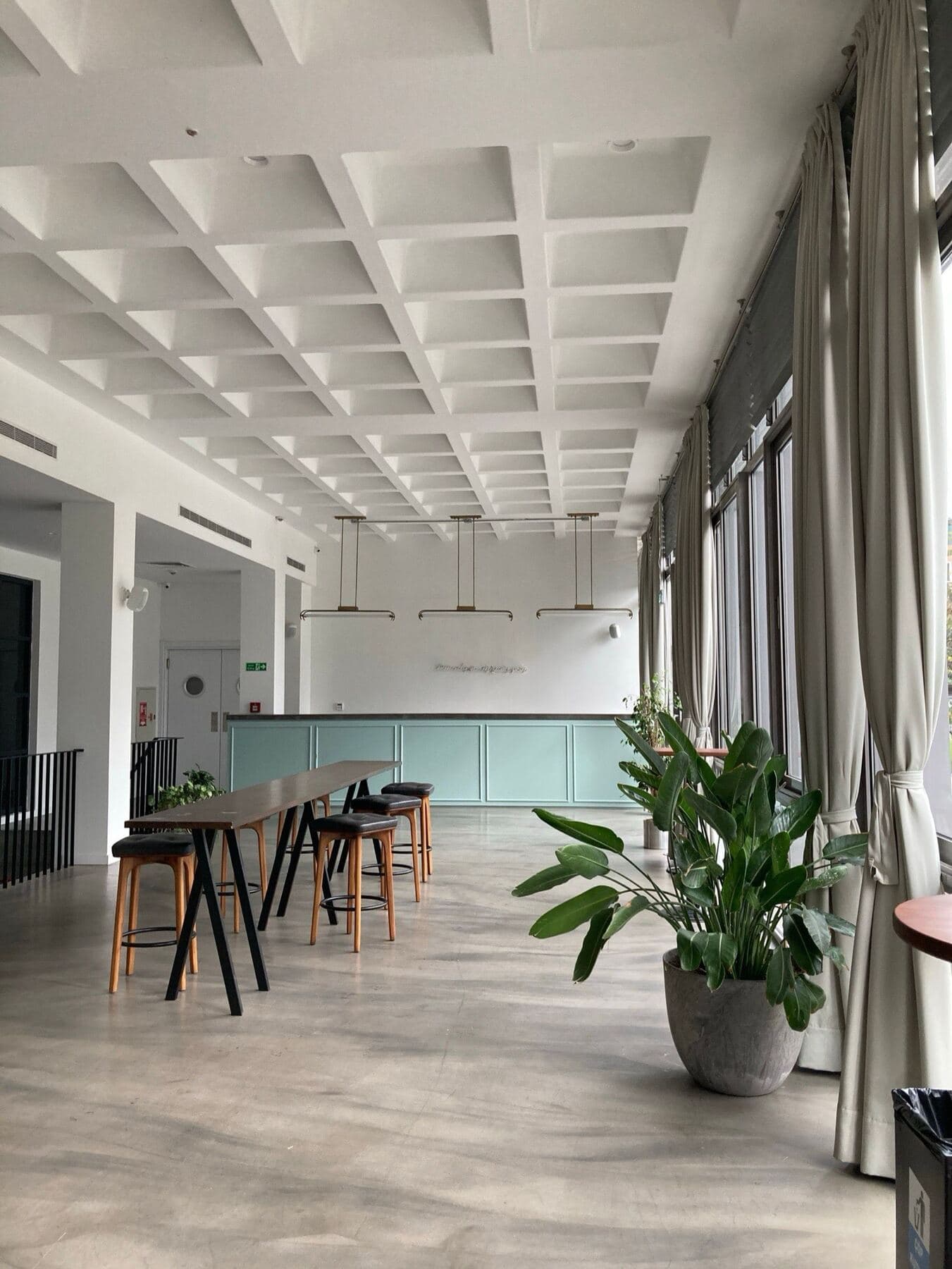
A shared learning space. Venues like this one can host classes close to where learners live and work.
At home and online
A learner and the right educator, one to one, at home or on a screen. The plan, the brief and the progress record are the same wherever the lesson happens.
In schools and universities
Network educators and programmes inside a partner school’s own classrooms: enrichment, exam preparation, languages and future skills, fitted to the academic calendar.
In companies
Corporate training for a team, built with the method: a starting point for each person, a plan, the right educator and progress the company can follow.
In learning venues
Coworking spaces, study rooms and learning centres host network classes close to where learners live and work, with educators who come ready to teach.
The heart of the network
Every educator, equipped from day one.
The teacher is the most advanced technology in education, and everything else we build, every partnership included, is there to amplify them. Our educators own the judgment, the relationship and the lesson, and the network equips them for it from the day they join.
72,000+
Educators
Educators, registered with the network. Figures as of 17 October 2026.
01
Selected and onboarded
Selection runs in layers, and every educator is onboarded to one teaching standard before they meet a learner.
02
Prepared for every learner
A learning brief arrives before the first lesson, and the plan stays current from your own session notes.
03
Teach where learners are
One application opens teaching at home, online, in partner schools, in companies and in learning venues across the network.
04
Supported as you grow
A growing guide library, feedback you can act on and a monthly report on your own teaching keep your craft moving, in every country we teach.
We build once, for everyone, the parts of teaching that improve with scale: the curriculum, the educator standard, the quality system, the partner programme and the technology. Our local operations carry the parts that belong to people who live where their learners live. Together they give every learner an educator who knows them and a standard that travels with them.
The centre builds
Local operations teach
Learning happens
Learning close to home. Local operations teach in the language of the learners around them.
The centre
What the centre provides
Curriculum
We write and maintain the programmes the network teaches, with clear goals, levels and mastery checkpoints, from school subjects to AI, coding and data.
Educator standard
We select educators in layers, onboard them to one teaching standard before they meet a learner, and keep a library of educator guides growing inside the platform.
Quality
Measured sessions, reviewed reports and one standard in every class, so quality holds as the network reaches more people and more places.
Partner programme
We bring schools, companies, course partners and learning venues into the network and give each of them the parts of the system they need.
Local operations
What local operations do
Teach
Local operations bring educators and learners together and run their classes day to day, on the method the whole network shares.
Serve learners in their language
They speak with learners, and with whoever supports them, in the language of home and stay beside them from the first assessment onward.
Know the ground
They know the local schools, calendars, exams and venues, and help shape each learning plan and each partnership around them.
Grow the network
They recruit educators in their country, open doors to local schools, companies and venues, and carry the network into new cities.
The centre
Shared technology
We build the systems that do the work around each lesson, so educators can give the lesson everything. The same systems keep the records and reports our local operations work from. This is the shared technology our network runs on, and we are extending it across the network.
Matching across ten factors, including subject fit, schedule, distance and track record
A personal learning brief for the educator before the first lesson
Learning goals that update from real session notes
Monthly progress reports drafted by our systems behind a quality gate, with our education team accountable for each one
Monthly reports for educators on the same cycle
Lesson notes translated into English every day
Learner feedback rewritten into a form an educator can act on
Attendance checks and session confirmation by the learner
Early signals that help our teams step in before a class slips
A learner app with class progress, class discussion, a placement test, exam tryouts and e-learning
An educator platform in seven interface languages, with verification set per country and sensitive documents encrypted
Reach
Local in every country, connected across all of them.
We advance the network country by country and partner by partner. Each new operation and each new partner joins one method, one curriculum and one standard, and brings personal learning led by a great educator closer to every learner near it.
Where we teach
20+ countries in one network
Indonesia
Singapore
Malaysia
Philippines
Thailand
India
United Arab Emirates
Saudi Arabia
Qatar
Egypt
Kenya
+ moreand more, 20+ countries in all
110+
Local operations
Each local operation teaches in its own country and language, and brings the method to the learners, schools, companies and venues around it.
270+
Partner organisations
Schools, companies, course partners and learning venues work with the network, each connected to the same method, curriculum and educator standard.
110+
Schools and learning institutions
Schools and learning institutions bring our educators and programmes into their own classrooms, for enrichment, exam preparation, languages and future skills.
30+
Corporate training clients
Companies train their people with our programmes and educators, planned around the skills each team needs next.
480+
Programmes
Every programme is written once at the centre and planned around each learner, so a learner at home, a class in a school and a team in a company meet the same standard.
12
Fields of study
From school subjects and languages to test preparation and professional skills, with future skills such as AI, Python, data science, robotics and coding for every age.
Local operations, running in the network; partner organisations, schools and learning institutions and corporate training clients, working with the network; programmes and fields of study, in the published catalogue. Figures as of 17 October 2026.
Division of work
Each decision sits with the people best placed to make it.
A network spread over 20+ countries stays coherent when everyone knows which choices are theirs. Questions that deserve one answer everywhere are settled at the centre. Questions that depend on a neighbourhood, a school calendar or a spoken language belong to the 110+ local operations that live with them.
Settled once, for every country
What a learner should master at each depth level, from Foundation to Professional, is written at the centre. So are the bar an educator reaches before teaching, the six steps of the method, the shape of every session record and the monthly quality check.
Owned by the local operation
The local team decides how to reach learners in its community, which areas and venues to serve first, and which schools and companies to approach. It talks with each learner in the language they speak at home, and it carries that relationship week by week.
Why the split holds up
Curriculum and quality grow stronger with scale, so we build them once and keep refining them. Trust with a learner grows through closeness, so it stays with people who share that learner’s city and language. The shared platform joins the two halves.
Watching quality everywhere
The same evidence reaches our education team from every country.
Quality across borders depends on being able to see it. Every operation produces the same records in the same shape, and every match weighs the same ten factors, so our education team can read classes in two countries side by side and judge them by one measure.
Notes written as each lesson closes
The educator writes session notes when each lesson ends, and those notes update the learner’s goals. Because the format is shared, a gap in progress shows early in any country, and the plan moves well before the learner falls behind.
One monthly report, checked before it leaves
Each learner's progress comes together in a monthly report written for the person who reads it, including a diagnosis of how the pace is going. Every report is scored in a quality check before release, and our education team answers for each one a learner receives.
A new educator whenever the fit is wrong
If a match does not work, we replace the educator, and the learner pays nothing extra for it. This standing promise holds in every country and with every local operation, so a learner’s progress never rests on staying with an educator who is the wrong fit.
Opening a new operation
How a new country or local operation becomes part of the network.
Every operation in the network arrived by the same path, whether it opened a new country or a new city. Each stage is complete before the next begins, so learners meet an educator only once the standard, the people and the reporting stand around that first class.
01
A conversation with our partnerships team
A prospective local partner writes to our partnerships team about its community: who learns there, what they want to learn, and the schools, companies and venues nearby. Together we work out where the community and the network meet, and what running an operation involves.
02
Alignment on the standard
We walk the partner through the curriculum, the six steps of the method, the bar every educator must reach and the way quality is checked. The partner commits to teaching every class to that standard, and we agree how the local team and the centre work together.
03
Educators prepared to the standard
The local team recruits educators in its country, and each of them completes our selection and onboarding, stage by stage, before meeting a learner. Educators then register on the platform, complete the verification set for their country and open the guides library.
04
The first classes
Learners are assessed, given a personal plan and matched on the ten factors. Ahead of that opening lesson, the educator reads a learning brief drawn from what was shared at enrolment, and from then on each session is recorded on the shared platform.
05
The monthly reporting rhythm
Once classes run, the operation joins the reporting cycle of the whole network. Each learner receives a progress report monthly, each educator gets one of their own, and one quality check covers all of them, read by the same measure as everywhere else.
Reach in practice
What reach across Asia, the Middle East and Africa means day to day.
For an educator or a partner, reach across three regions comes down to three practical things: a single way in, a single standard to work to, and a platform that speaks the language of the person using it every day.
One application for an educator
An educator applies once and joins a network whose lessons take place in learners’ homes, in companies, in learning venues, on campuses and in schools, and online. Their profile and teaching record follow them, and our matching draws on that record wherever the learner is.
One standard for a partner
A school in the Gulf, a company in Southeast Asia and a learning venue in East Africa work to the same curriculum and quality system. A partner with sites in several countries deals with one method, and its learners receive reports that read alike.
Seven interface languages
Educators use a platform offered in seven interface languages, so each of them works in a language they read comfortably while the records underneath stay shared across the network. The verification documents asked for differ by country, and anything sensitive is kept in encrypted storage.
Questions about the network
What partners and journalists ask us about the network.
Prospective partners, school and company leaders and writers covering education tend to raise the same few points. For anything further, our partnerships team at partners@eduspine.com and our press team at press@eduspine.com reply by email to every message they receive.
Who runs the classes in each country?
A local operation runs them. It brings educators and learners together, arranges the lessons and holds the relationship with each learner in their own language. The centre supplies the curriculum, the six-step method, the bar for educators, the shared technology and the quality checks.
Can a learner enrol or pay on this site?
This site takes no enrolments and no payments. Every lesson is arranged on the ground by the operation serving that country. The forms here serve contact, partner enquiries, the careers talent community and educator applications, and none of them asks for a payment.
How do you compare a class in one country with another?
Every class produces the same evidence: session notes after each lesson, learner goals revised from those notes, and a monthly report that passes a quality check. Our education team reads that evidence by one measure and answers for each report that goes out.
Does a local operation adapt the curriculum?
Our curriculum is written centrally on a depth scale from Foundation to Professional, with a mastery checkpoint closing each stage. Local teams shape each learning plan around the schools, calendars and exams their learners face, and share what they learn.
How does an organisation start a partnership?
It writes to partners@eduspine.com describing the people it serves and the difference it hopes learning will make for them. The right team replies by email to set up an opening conversation, and company details are available on request through the same mailbox.
Partners
How partners join the network.
New countries join through local partners, and new places join through schools, companies, course partners and learning venues. Every partnership starts the same way, and every one of them is built around an educator in front of a learner.
Schools
Companies
Course partners
Local partners
Learning venues
01
Introduce yourself
A school, a company, a course partner, a local team or a venue tells us who it serves and what it wants learning to do for them.
02
A first conversation
We talk through the learners, the programmes and the place, and which parts of the network fit: educators, curriculum, the method or the full system.
03
Plan together
We shape the partnership around one standard: who teaches, what is taught, where and how progress is measured.
04
Begin
The first classes open as part of the network, and every class the partner hosts or runs joins the same standard as the rest.